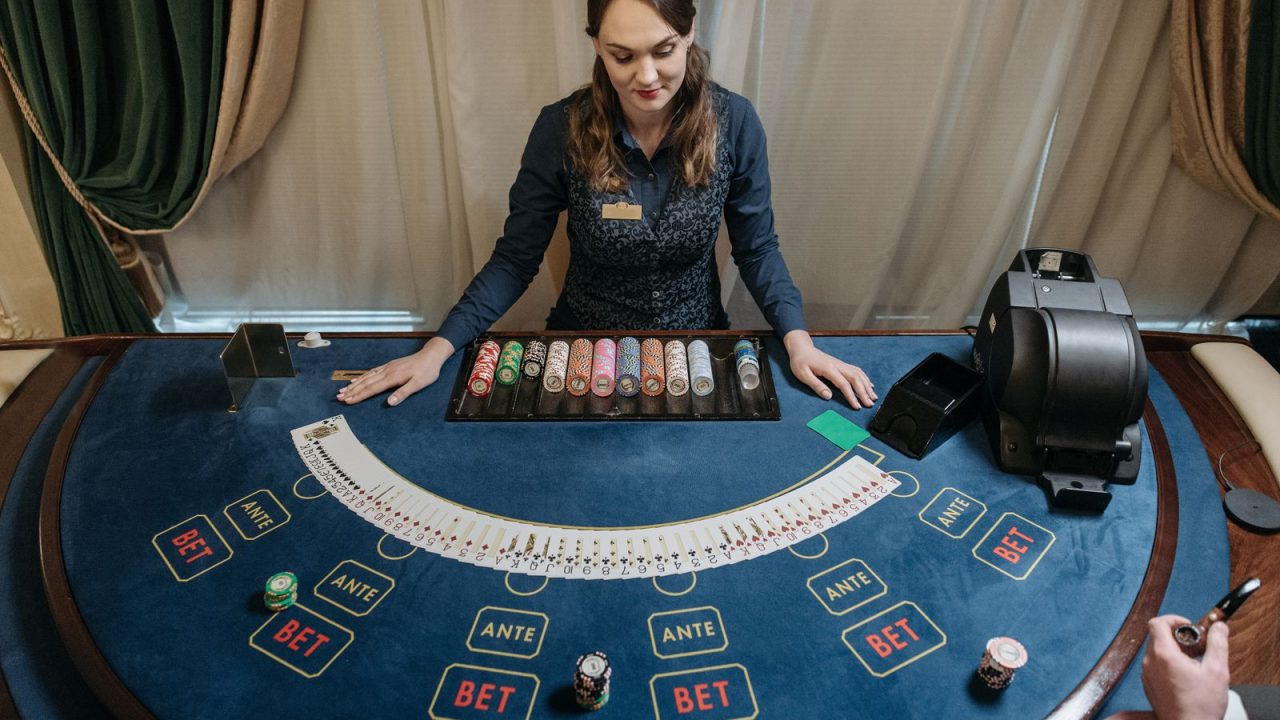
Many players trust live dealer tables more than digital ones because they can watch real cards and a real wheel. That instinct is half right. The stream does remove one worry, since you can see the shuffle and the spin, but it does nothing to the house edge. The edge was always in the rules and the payouts, and those are just as fixed on camera as they are in software. A live blackjack game paying 6:5 on a natural costs more than a digital game paying 3:2, no matter how friendly the dealer is.
What exactly is a live dealer game?
It is a table game played by a human dealer in a studio, streamed to your screen, with bets placed through an on-screen interface. Card and wheel results are captured by cameras and recognition systems and settled automatically. The format covers blackjack, roulette, baccarat, poker-based games and game-show formats with wheels or multipliers.
In the US the largest supplier is Evolution, which operates studios in New Jersey, Pennsylvania, Michigan and West Virginia. Its first US studio opened in New Jersey in 2018, and a new Michigan studio in Grand Rapids became its second in that state. Studios that serve state-licensed casinos operate under approval from the state regulator; the New Jersey Division of Gaming Enforcement, for example, approved Evolution’s purpose-built New Jersey studio before it went live.
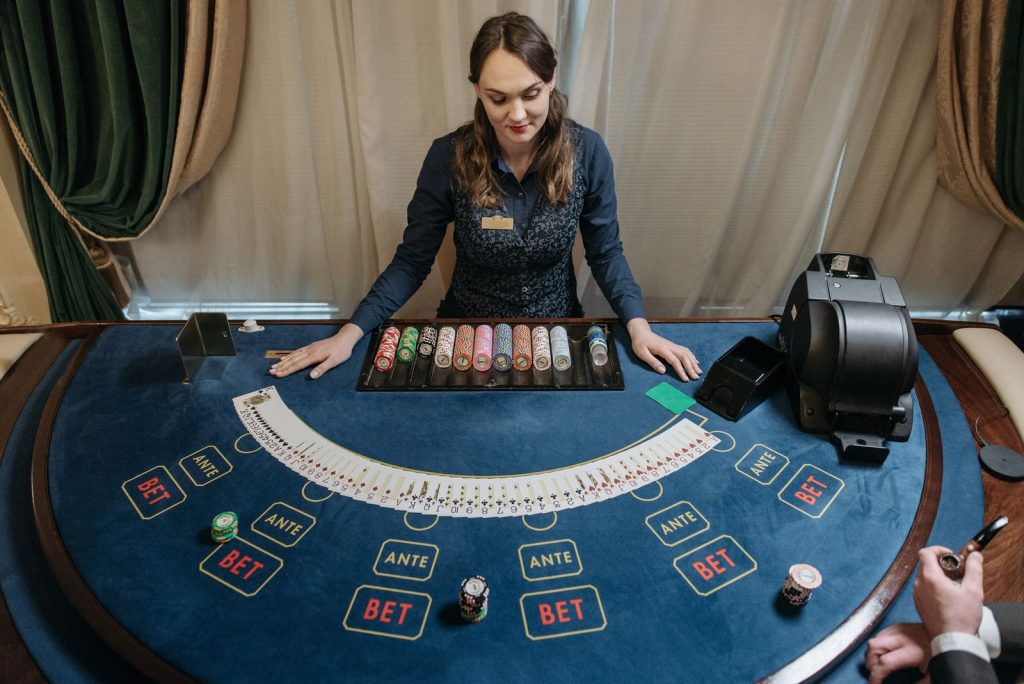
Does watching the cards make the game fairer?
It makes the game verifiable, which is different. On a state-licensed site in New Jersey, Pennsylvania or Michigan, both live and digital games operate under regulator-approved rules and testing. The house edge is identical to the land-based equivalent with the same rules. What changes from table to table is the rule set, and that is where players lose money without noticing.
Reality check: the information panel at each live table lists payouts and, on most US sites, the theoretical return. Reading it takes thirty seconds and tells you more than the camera ever will.
Which live games cost the least to play?
These are standard figures for the main bets, assuming the usual rules listed. Variants with side bets or multipliers have their own numbers, which appear in the game’s help panel.
| Live game | Bet or condition | House edge | What raises the cost |
|---|---|---|---|
| Blackjack | Basic strategy, good rules, 3:2 natural | About 0.5% | A 6:5 natural adds about 1.4% |
| Baccarat | Banker (5% commission) | 1.06% | Tie bets and side bets |
| Baccarat | Player | 1.24% | Same |
| Baccarat | Tie at 8:1 | 14.36% | Already the worst main bet |
| Roulette | Single zero | 2.70% | Switching to a double-zero wheel |
| Roulette | Double zero | 5.26% | The 0/00/1/2/3 top-line bet at 7.89% |
| Roulette | Triple zero | 7.69% | Avoid entirely |
| Game shows | Varies by segment | Published per game | Multiplier features usually carry a lower return than plain bets |
Blackjack only reaches the low figure if you play correctly. Without basic strategy the edge climbs several times higher. Baccarat requires no decisions, which is why our baccarat guide focuses on bet choice instead. If a live dice game is on offer, the craps numbers in our craps guide apply exactly as on a physical table.
Which rules should you check at a live blackjack table?
Live blackjack tables from the same studio can run different rule sets for different operators, so the help panel is worth reading every time. These are the lines that move the house edge:
- Natural payout. 3:2 is standard. A 6:5 table adds about 1.4% to the house edge, which is more than every other rule on this list combined.
- Soft 17. A dealer who stands on soft 17 is better for you than one who hits it.
- Doubling. Being allowed to double on any first two cards, and after splitting, helps the player. Restrictions to totals of ten or eleven cost you.
- Surrender. Late surrender, where offered, lets you give up half your bet on the worst hands. It is a small gain if used correctly.
- Number of decks. Fewer decks favor the player slightly, all else equal.
Some live formats let an unlimited number of players share one dealt hand, each making their own decisions. Check whether such a table uses the same rules as the seated version; it often has its own side bets and its own published return.
Why do side bets and multipliers deserve suspicion?
Because their pricing is hidden in plain sight. A side bet paying 25:1 sounds generous until you work out how often it hits. The baccarat tie bet is the cleanest illustration. At 8:1 it carries a 14.36% house edge. Some tables pay 9:1, which drops the edge to 4.84%. Same cards, same shoe, one payout unit of difference, and the cost of the bet is three times lower.
Multiplier games work the same way. A roulette variant that adds random multipliers to straight-up numbers usually pays less than 35:1 on the numbers that do not get a multiplier. The total return is published in the help panel. If you cannot find it, that alone is a reason to skip the table.
Red flag: a live table that hides payouts behind a “rules” link that opens nothing, or shows only “fair play” badges without a return figure. On a state-licensed site this information is part of the approved game.
How fast does a live table spend your money?
Slower than digital tables, which is one of the few genuine advantages. A live round includes dealing, decision time for every seat and settlement. Fewer rounds per hour means less exposure to the edge. The expected cost is simple to estimate: average bet, times rounds per hour, times house edge.
| Example only (hypothetical) | Bet | Rounds per hour | House edge | Expected cost per hour |
|---|---|---|---|---|
| Blackjack, basic strategy, 3:2 | $10 | 60 | 0.5% | $3.00 |
| Blackjack, basic strategy, 6:5 | $10 | 60 | 1.9% | $11.40 |
| Baccarat, banker | $10 | 60 | 1.06% | $6.36 |
| Baccarat, tie at 8:1 | $10 | 60 | 14.36% | $86.16 |
| Roulette, double zero | $10 | 40 | 5.26% | $21.04 |
The round counts are illustrative, not measured; real tables vary with the number of seated players. The point is the ratio. The same $10 a hand costs nearly thirty times more on the baccarat tie than on correctly played 3:2 blackjack.

What happens when the stream fails mid-hand?
Every licensed live game has a malfunction rule, usually stating that a malfunction voids affected plays and that bets are returned. Disconnections on your side are typically handled by a default action (for example, standing in blackjack) or by settling the round as dealt. The precise rule is in the game’s help panel and the operator’s terms.
If a result is settled incorrectly on a state-licensed site, the operator’s complaint process comes first, then the state regulator. New Jersey, Pennsylvania and Michigan all require the operator step before they take a dispute. The details are in our guide to casino payout disputes.
Is a live table on an offshore site the same product?
The cards may look the same. Everything around them is not. No US regulator approves an offshore studio, tests its recognition systems or hears a complaint when a hand is settled wrongly. Offshore sites also are not legal for players in any US state. Before trusting any live table, confirm the site itself on the regulator’s list using our license verification steps.
So what is the takeaway?
The camera proves the cards are real; the paytable decides what they cost you. Pick the 3:2 blackjack table, the banker bet or the single-zero wheel, read the help panel before the first bet and play only on a site that a state regulator lists.
21+ only. Availability and legality vary by state. If gambling has stopped being entertainment, call or text 1-800-GAMBLER, or use the chat at ncpgambling.org. Self-exclusion and limit tools are covered on our safer gambling page.