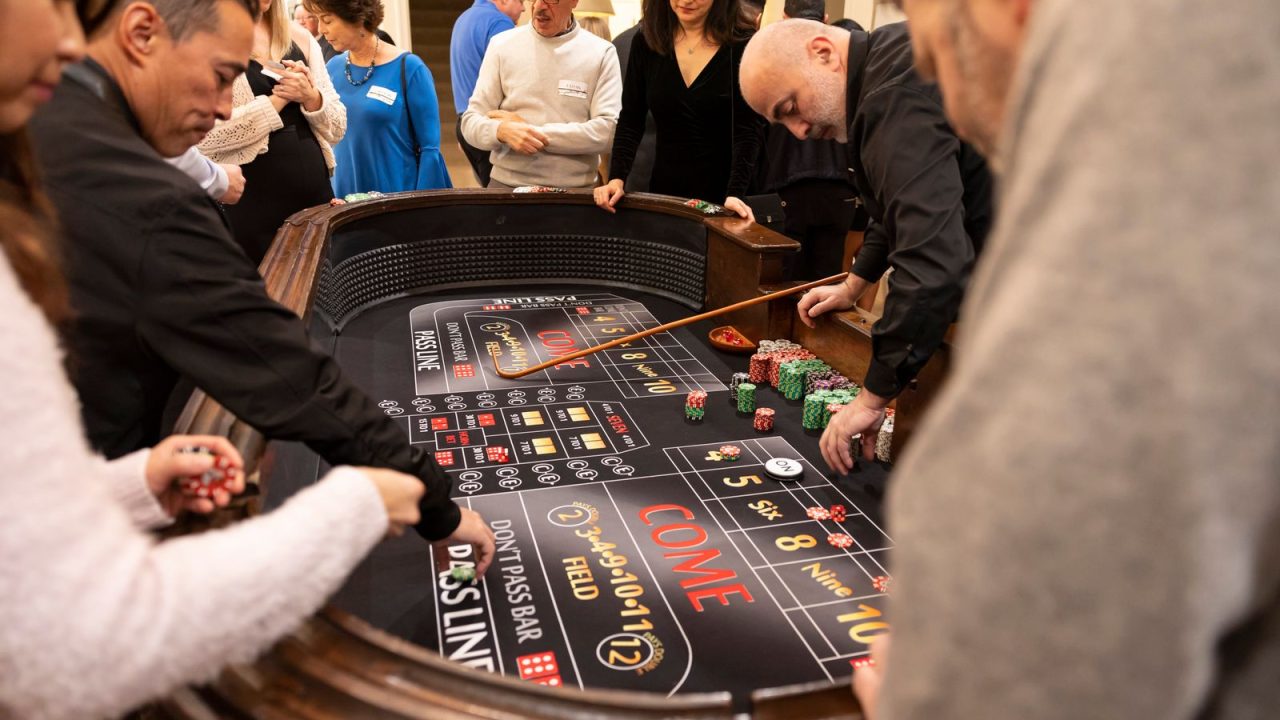
Craps looks like the most complicated table in the casino: a crowded layout, a stickman calling numbers and dozens of places to put chips. The popular conclusion is that the game rewards experience and clever bet combinations. It does not. Craps contains both one of the cheapest bets in any casino and some of the most expensive, sitting a few inches apart on the same felt. Knowing which is which is nearly the whole game.
Why do 36 dice combinations decide everything?
Two six-sided dice produce 36 equally likely combinations. Every payout on the table can be compared against those counts, which is how house edges are calculated. Seven is the most common total because six combinations make it.
| Total | Ways to roll it | Chance per roll | True odds against |
|---|---|---|---|
| 2 or 12 | 1 each | 2.78% | 35 to 1 |
| 3 or 11 | 2 each | 5.56% | 17 to 1 |
| 4 or 10 | 3 each | 8.33% | 11 to 1 |
| 5 or 9 | 4 each | 11.11% | 8 to 1 |
| 6 or 8 | 5 each | 13.89% | 31 to 5 |
| 7 | 6 | 16.67% | 5 to 1 |
Any bet that pays less than its true odds carries a house edge. The question is only how much less.
How does a round of craps actually work?
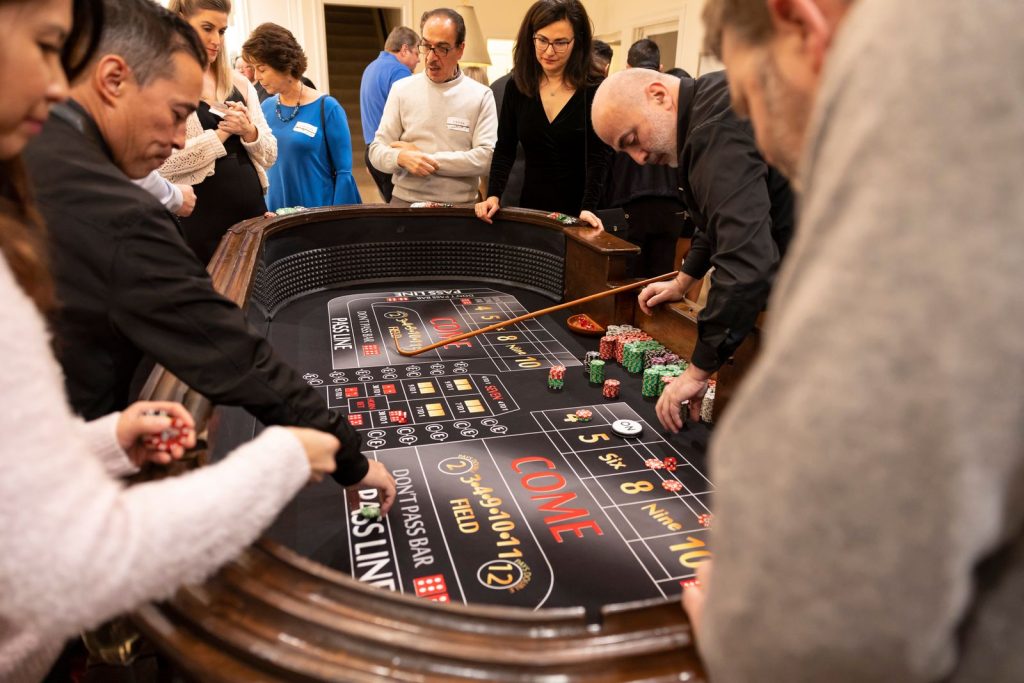
The first roll is the come-out roll. A pass line bet wins on seven or eleven and loses on two, three or twelve. Any other total (four, five, six, eight, nine or ten) becomes the point. The shooter then keeps rolling until the point repeats, which wins the pass line, or a seven appears, which loses it. The don’t pass bet is roughly the mirror image, except that twelve on the come-out is a push instead of a win, which is how the house keeps its edge.
Come and don’t come bets follow the same logic but start on any roll after the point is set.
Which bet is the best value on the table?
The pass line carries a house edge of 1.41%. Don’t pass is slightly lower at 1.36%. Both qualify as some of the lowest-cost bets in a casino, and they get better once the point is set, because of the free odds bet.
Free odds is an additional wager placed behind your pass or come bet after a point is established. It pays at true odds, so it has no house edge at all:
- Point of four or ten: odds pay 2 to 1
- Point of five or nine: odds pay 3 to 2
- Point of six or eight: odds pay 6 to 5
Many tables cap odds at “3-4-5x”: three times the line bet on four or ten, four times on five or nine and five times on six or eight. Taking full odds on that structure dilutes the 1.41% pass line edge to about 0.37% of the total money wagered. The edge on the line bet itself does not change; you simply add money that faces no edge.
A worked example (hypothetical stakes): a $10 pass line bet, the point is six and you add $50 in odds, the five-times maximum on a 3-4-5x table. If the six repeats before a seven, the line bet pays $10 and the odds pay $60 at 6 to 5. If the seven arrives first, you lose $60. Only the first $10 carried a house edge.
Reality check: free odds lowers the percentage, not the risk. Your total bet grows, so your swings grow too. Size the line bet so that full odds still fits your budget.
Which bets look tempting but cost far more?
The center of the layout holds the proposition bets, and that is where the house earns most. The figures below are the house edge per bet resolved, calculated from the 36 combinations.
| Bet | Typical payout | House edge | Verdict |
|---|---|---|---|
| Pass line / come | 1 to 1 | 1.41% | Good |
| Don’t pass / don’t come | 1 to 1 | 1.36% | Good |
| Free odds | True odds | 0% | Best on the table |
| Place 6 or 8 | 7 to 6 | 1.52% | Acceptable |
| Buy 4 or 10 (5% paid on wins only) | 2 to 1 less commission | 1.67% | Acceptable where offered |
| Field (2 to 1 on 2, 3 to 1 on 12) | 1 to 1 on 3, 4, 9, 10, 11 | 2.78% | Mediocre |
| Place 5 or 9 | 7 to 5 | 4.00% | Weak |
| Field (2 to 1 on both 2 and 12) | 1 to 1 on the rest | 5.56% | Poor |
| Place 4 or 10 | 9 to 5 | 6.67% | Poor; buying is cheaper |
| Big 6 or Big 8 | 1 to 1 | 9.09% | Bad: place 6/8 is the same bet at better pay |
| Hard 6 or hard 8 | 9 to 1 | 9.09% | Bad |
| Any craps | 7 to 1 | 11.11% | Bad |
| Eleven (“yo”) | 15 to 1 | 11.11% | Bad |
| Hard 4 or hard 10 | 7 to 1 | 11.11% | Bad |
| Two or twelve | 30 to 1 | 13.89% | Very bad |
| Any seven | 4 to 1 | 16.67% | Worst on the table |
The Big 6 shows how this works. It wins when a six comes before a seven, exactly like a place bet on six. The place bet pays 7 to 6; the Big 6 pays even money. Same event, one bet costing six times as much.
Red flag: a “hop” or proposition bet advertised as paying “30 for 1”. The word “for” includes your stake, so 30 for 1 equals 29 to 1. Always check whether a payout is stated “to” or “for”.
Why do some sources quote much smaller edges?
Some calculations report the house edge per roll instead of per bet resolved. A pass line bet can stay on the table for many rolls, so dividing its cost across every roll produces a smaller number, while a one-roll bet like any seven is unchanged. Both methods are valid; they answer different questions. Per bet resolved tells you the cost of the wager you made. Per roll tells you the cost of time at the table. Comparing a per-roll figure against a per-bet figure is how bad bets get made to look reasonable.
Is online craps the same game?
The math is identical if the rules are. Digital craps on a state-licensed site uses a random number generator certified under the state regulator’s testing rules, so each total appears with the same probability as on real dice. What can differ is the rule set: field payouts on twelve, how much odds the game allows and whether buy bets charge commission on wins only. All of that is in the game’s help panel.
Online craps is legal only on sites licensed in New Jersey, Pennsylvania, Michigan, West Virginia, Connecticut, Delaware or Rhode Island, and only while you are inside that state. Our license verification guide shows how to confirm a site before depositing. Players interested in other low-edge games will find the same logic applied in our video poker and baccarat guides, and our live dealer guide covers streamed tables.
What does a sensible craps session look like?
- Bet the pass line (or don’t pass) at a level that leaves room for odds.
- Once the point is set, take the maximum free odds you can comfortably afford.
- If you want more action, add come bets with odds, or place the six and eight.
- Ignore the center of the table entirely.
- Set a loss limit before the first roll and use the site’s deposit limit tools.
So what is the takeaway?
Craps is cheap for players who stay on the line and take odds, and expensive for everyone who drifts to the middle of the layout. The layout is busy precisely because the bad bets need to be noticed.
21+ only. Availability and legality vary by state. If gambling has stopped being entertainment, call or text 1-800-GAMBLER, or use the chat at ncpgambling.org. Self-exclusion and limit tools are covered on our safer gambling page.